Showing posts with label grammatology. Show all posts

Monday, April 4, 2011

Forecasting the Seminar Paper

TITLE: "(Dis)Locating Thought: The Graphic Ontology of World Browsers"

The first part of title names a quintessential experience of the media in question, much like the title of a short essay by Jenny Edbauer Rice -- "Overhearing: The Intimate Life of Cell Phones."  Furthermore, like Edbauer Rice's "Overhearing," "(Dis)Locating Thought" serves as a theoretical departure point: the work of the essay is to unpack the rhetorical or grammatological implications of the phrase.  In my case, the phrase suggests from the outset that, by making it possible to "geotag" thoughts (or, more precisely, writing) to specific GPS-enabled locations, the emergent genre of smartphone apps known as world browsers actually disrupt the conventional, literate experience of thought.  While I do not mean to claim that everyone experiences thought in exactly the same manner, we clearly share the notion that thinking is typically a silent meditation or dialogue with one's self, located in the brain.  An icon of philosophy and the act of thinking, Auguste Rodin's 1902 sculpture The Thinker -- a highly regarded masterpiece of Western art -- depicts precisely this image of thought (as do each of its appropriations):


A powerful twenty-first century appropriation of The Thinker would be to place a smartphone into the figure's bottom hand.  As smartphones rapidly gain popularity, they seem ever increasingly to enter into the scenes of thought in everyday life.  Indeed, industry experts predict that in five years people will turn to smartphones for internet access more often than desktops or laptops.  Given this turn toward "small tech," it makes sense to examine internet applications, like world browsers, that are designed around the specific affordances of mobile hardware, such as augmented reality, GPS, and QR coding.

World browsers exemplify a new way of moving through information.  My essay, however, will not just move from one example app to the next; my aim is to emphasize the significance of this emerging genre in terms of the history and theory of writing.  To that end, the structure of my essay is guided by another observation about world browsers: world browsers bring together an array of different hardware and software, thus creating a unique constellation among media that, until now, have been developed and used apart from one another.  

STRUCTURE: After a 3-4 page introduction, the rest of the essay will be broken into six sections, which will each be about 2-3 pages.  Each of these sections will focus on a prior media that world browsers mobilize (pun intended); I will reference concepts advanced by scholars writing about that media before the advent of world browsers, using (and reworking) those concepts as a means to theorize the rhetorical/grammatological implications of world browsing.  At this point, I'm pretty settled on the following six sections:

1. Cell Phones
2. Web Browsers & Search Engines
3. Web 2.0 Platforms
4. Locative Media Art
5. Augmented Reality
6. Iconic Photojournalism


Tuesday, March 1, 2011

Human-Computer Relations

Questions concerning the relationship between humans and computers (or, more generally, technology) pervade -- and evade -- Ron Burnett's How Images Think.  That is to say, the value of Burnett's book lies in its capacity as an intellectual map that clearly identifies a handful of urgent/important landmarks for theorists writing about contemporary human-computer interaction; Burnett himself does not offer much in the way of directions or the insights we'd expect from someone who has reached a critical destination.  Below are a few of these signposts that I've extracted from the book.


Signpost #1
Burnett repeatedly critiques the terminology that (digital) humanities scholars who study images/technology have adopted from the computer scientists and engineers who build imaging/writing technologies, as if these terms like "user" and "input/output" were simply inherent or natural.  The fact is that our routine acceptance of the descriptor "user" implies a particular view of the human-computer relationship.  To position the human as user consequently positions the computer as tool, and this relation suggests the paradigm of augmentation (i.e., the machine as a prosthetic extension of man) that has been the leading model in computer science since Vannevar Bush and John Von Neumann, as well as the conventional wisdom in media theory Marshall McLuhan.  Burnett insists that our habitual repetition of mechanical metaphors inhibits from realizing a new paradigm that would account for "the shifting ground of human subjectivity" evident in (and spurred on by) the current/emergent mediascape.


Signpost #2
Recent digital imaging technologies provide a plethora of examples showing how images have literally become interfaces -- fluid and dynamic spaces (imagescapes) in which processes of visualization generate relationships between individual/collective thoughts, feelings, percepts, affects, and values.  (Indeed, images have perhaps always functioned as interfaces in this sense -- perhaps digital media just makes it more apparent for us.)  Even more profoundly, in concert with grammatology, Burnett proposes that images have always been the interface through which human perception operates: "To see images is also to be seeing with images" (33).  In other words, seeing is a function of images and our visual experience of any given reality never attains outside of images; images do not threaten or distort (nor mirror) reality and image-making does not represent reality but produces 'the real as image": we never experience a reality that is somehow prior to or purged of images (I guess this claim excludes cases of visual impairment, though?).  Is it possible to claim, then, that our "reality" have always already been "augmented" by images?


Signpost #3
In gesturing beyond the augmentation model, Burnett describes the interactions between human and computers (particularly in video games) in terms of symbiosis, which is of course reminiscent of J.C.R. Licklider's metaphorical use of this biological concept in his 1960 landmark essay "Man-Computer Symbiosis".  In my estimation, symbiosis is ultimately a fruitless metaphor when applied to human-computer interaction; it does not displace the centrality of use that delimits the scope of relations under augmentation.  The only notable change modeled via symbiosis is that the use-relation doubles and becomes a two-way street: the insect pollinates the fig tree and the fig tree yields food to the insect, and, so too, the human user decides on certain data input and the computer calculates/outputs that data for the human to draw conclusions (Licklider).  The specific (even contrasting) talents of each entity produce a benefit for both entities: the human is incapable of calculating at the speed and magnitude of the computer, and the computer is incapable of producing intelligible results without the human's data input.  Like augmentation, however, each entity uses the other as a means to the fulfillment of their own intention, reinforcing the contours of their self and their own self-interest, going about their business without ever having to change (or notice the already occurring changes accruing) in light of the interaction.  Late in the book, just for a few pages, Burnett does flirt with the idea of a "third level" emerging out of the symbiosis metaphor.  Burnett calls it "hybridization" (a term which also has roots in biological discourse).  I find the concept of hybridization much more promising than symbiosis because it foregrounds the proposition that human-computer relationships are about learning and transformation as much use and execution.  Having drawn from Bruno Latour, Burnett builds to a ripe summary of hybridization:
Hybridization, then, is about more than a mixture of elements with a particular outcome or result: rather, hybrids underlie the processes of change and evolution as technologies and humans encounter each other.  To think in these terms is to put intelligence and subjectivity back into human-technology relations.  Rather than modeling technology in the broadest sense as a series of tools for pragmatic use, there is a need to think about how human subjectivity and the ability to self-reflexively examine identity has evolved out of the relationships humans have with machinery, artifice, and their creative engagement with technology. (174)
In his discussions of hybridity, Burnett is at once outlining the emergent figure of the posthuman.  For all his mentions of subjectivity, though, Burnett never really sustains a rigorous, theoretical account to accompany his claim that, for example, "humans are now communicating in ways that redefine the meaning of subjectivity" (221).  For the conceptual building blocks of such an account, one of the best sources to turn to his Felix Guattari's late writings on ecosophy, which concerns the emergence of posthumanism every bit as much as it concerns ecology.

Monday, February 21, 2011

AR Writing Scenes

This post is a follow up to a post below called "Scenes of Writing and the Staging of Theory," and my comments here all refer to the demo videos of AR apps in that post.

What I want to to in this post is describe some the more salient aspects of the AR writing scenes pictured in these videos, all the while keeping in mind a few of Derrida's insights on writing and Mitchell's notion of imagetext.

So, here I go with a couple of observations:

1. The surface of inscription, or "the signified face": any surface lends itself to virtual inscription and thereby can -- via AR apps -- come to act as a signified face.  This virtual inscription (digital arche-writing?) occurs through geotagging or through the physical placement of QR codes onto a particular surface (or designing a surface -- most any substance -- to appear/function as a QR code).  With AR apps, all the world's a link and writing leaves no trace (or at least no trace that can be seen by the naked eye).  Each of the AR apps pictured below employ geotagging and not QR codes, presumably because geotagging is much more suited for establishing flexible, global networks of users and information -- QR codes require physical installation/maintenance and can be implemented without passing through and affixing to a Web-based network (hence the writing of QR codes do not always contribute to or reinforce an existing network).  It may be helpful to remind ourselves here that writing, as Derrida claims in Of Grammatology, "designates not only the physical gestures of literal pictographic or ideographic inscription, but also the totality of what makes it possible; and also beyond the signified face, the signifying face itself" (9).


2.  Disjunctive imagetext: as a user, I can select the site of the visual, to which my text will be geotagged, but I cannot control the composition of that visual, for it is a generally a dynamic, public space and it (and the people who occupy it) need not know that it is the place of my text. That is, the location as a writing space bears no sign of the marks I place upon it -- only a signal of the sign.  As such, the image/text dynamics potential to AR apps seem to forecast some strange political ramifications. Mitchell makes it a point to identify the political as he discusses the "older" image-text media:
The image-text relation in film and theatre is not a merely technical question, but a site of conflict, a nexus where political, institutional, and social antagonisms play themselves out in the materiality of representation. (91)
This play of antagonisms would seems to take on an even further performative dimension in the sites of conflict mobilized by popular use of AR apps.  I can caption any particular location with my text or images without imposing upon its space and, therefore, intervene into some people's  experience of that place (i.e., people who have the right app) and remain undetected by other people who occupy that place (i.e., people who don't have the app) -- a stream of writing affects the discourse of a place without it even being perceptible as a writing space.  On the other hand -- and even, because of this -- those who (or even that which) occupies a place has the power (even if unaware of my text) to appropriate, defuse, or otherwise redirect the meaning/reception of my text by virtue of its autonomy from my text.  If the place changes (and likely plays host to many kinds of fluctuations), then my text, which the app positions as a caption to the visual scene, can be caught sleeping, so to speak.  Though they clearly embody a new "conjunction of images and words" like the earlier mixed media genres Mitchell discussed, the imagetext conjunction occurring within AR apps is inevitably disjunctive when we consider the radical dispersion of the visual and the stealth secrecy of the verbal, both of which are ultimately contingent upon and imminent to the technological gestures of the user in motion.

Monday, January 24, 2011

The Scene of Classical Rhetoric

Phryne in Greek Courthouse
At least half of scholars in Defining Visual Rhetoric take a deductive approach to visual rhetoric; in other words, they appeal to longstanding concepts from the classical rhetorical tradition in order to frame and justify their engagement with modern and contemporary visual artifacts.  In the collection's first two essays, Blair abides by Aristotle's notion that the proper concern of rhetoric is rational persuasion via propositional logic, while Hill, in investigating the rhetorical force of "representational images," applies the classical view that language serves as a window to reality.  In both cases, the authors end up acknowledging but quickly dismissing images that do not fit neatly with the assumptions of traditional rhetorical theory.  Blair dismisses the bulk of recent advertising on the basis that it does not attempt to make rational claims (therefore it's not persuasion, therefore it's not rhetoric).  I want to give more attention to the kind of image that Hill (more subtly) dismisses. 

To Hill's mind, "the rhetorical situation" generally denotes an speech-centric environment quintessentially exemplified by the courtroom:
most rhetorical situations are complex, and often involve two or more advocates stating their respective cases, attempting to win adherence from audience members who are simply trying to determine what they should believe and how they should feel about the issue at hand. (27)
The rhetor, according to Hill, hopes to craft his argument such as to render his most important claim or piece of evidence with the greatest degree of presence in the audience's minds.  If the audience can accept the rhetor's central claim (because of its blatant presence for them), then they will "not stop to think about issues such as the relevance or actual importance of the evidence" (29).  Hill himself seems to be performing this principal in his own essay, just a paragraph after introducing it.  In making his case in favor of the serious study of rhetorical images, Hill champions the indexical presence of filmic/photographic images.  Because filmic/photographic images constitute a "captured reflection of an object or person that actually exists or existed at one time," they are for Hill an acceptable object of rhetorical study--they represent a possible truth in the same way that linguistic claims do from a neoclassical standpoint.  Images should be brought into the classroom and utilized by students as vivid bits of reality meant to supplement and/or intensify the rationality of their verbal arguments.  The presence of this point, Hill hopes, will subdue any objections its 'relevance or actual importance' for our contemporary visual culture.

Evidently, Hill harbors at least some anxiety about the reach or validity of his approach as he asks his readers to momentarily forget about the digital image: "(Let us bracket, for the time being, any discussion of the new digital image manipulation techniques that make such an assertion far from certain)" (29).  Why does Hill wish to bracket any discussion of digital images?  I suspect it is because digital images--by no means indexical--do not propose to unconditionally represent truth, reality, or anything; and yet, the flexibility of digital manipulation can simulate/approximate the perception of the real with even greater precision than the indexical image.  As such, the digital is (neo)classical rhetoric's worst nightmare.  The digital image is the new Phryne in the courthouse of neoclassical rhetoric.  (Follow the link in the picture caption above for a brief summary of the story/myth of Phryne.)  Like the Greeks do with Phryne, Hill, in his parenthetical remark, merely acquits the digital image.  It does not fit the logic of the courtroom, which appears and reappears as the paradigmatic scene of (neo)classical rhetoric and stands in as the prototypical rhetorical situation on which the rhetorical tradition is founded and geared toward.

If the courtroom speech no longer functions as the scene quintessential to contemporary visual communication, then what could we consider to be the paradigmatic scene of digital imaging?


Thursday, January 13, 2011

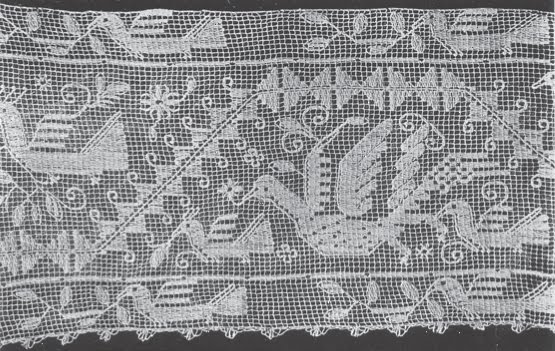
RELAY -> Needlework


In her contribution to Defining Visual Rhetorics, Maureen Goggin discusses the cultural history of needlework as a material/semiotic practice.  More specifically, she qualifies needlework as a unique kind of writing system.  What makes needlework especially significant for Goggin is the fluidity with which it negotiates the rhetorical tradition's arbitrary, logocentric division between the verbal and the visual:
Needlework as a practice may be best understood as a form of meaningful mark-making—a polysemous system of writing. It incorporates two broad families of writing systems—what Geoffrey Sampson has termed semasiographic systems and glottographic systems.  Semasiographic systems are defined as “systems of visible communication…which indicate ideas directly” (e.g., international sign symbols). The other, glottographic systems, are those “which provide visible representations of spoken-language utterances” (e.g., alphabet systems such as written English). (90)
According to Goggin, as the cultural place of needlework changed over history, its value as a semiotic resource (or writing system) eventually changed from a complex, expressive form of art to a standardized trade or skill.  In particular, early needlework samplers "served as a form of rhetorical invention," and, by the 16th century (the emergence of print culture and the Protestant Reformation), sampler makers began to incorporate the alphabet and numbers into their designs.  By the late 18th century, "text dominated English and American samplers...Sampler making slowly transformed as it participated in a web of other semiotic practices and circulations, especially those of cheap print" (98).  Pretty soon it became conventional for needlework samplers to center on textual, moral lessons; the work of needlepoint was by and large reduced to a matter of demonstrate one's skill at copying such textual signifiers.

Samplers became regarded as finished products for emulation (payoff: character building, showoff skill) rather than a heuristic designed to prompt invention (payoff: aesthetic, semiotic expression).  Goggin attributes this shift to the logocentric tendencies of (early) modern Western metaphysics/rhetoric (or "the bifurcation of word and image"), which she associates with the convergence of cultural force of religious politics and the material-rhetorical affordances print technology.  Generalizing from this analysis, Goggin presents a useful framework for considering any rhetorical practice or writing system:
...the materiality of constructing meaning is contingent on material resources, cultural values and cultural positioning. These factors, however, shift in response to kairotic conditions of time and place as well as technological, economic, social, political and cultural forces. In short, complex contextual forces both permit and limit resources, valuations and positioning, thus fostering certain material practices while limiting others, and, as a result, both cultivate and restrict the range of possible rhetorical participants and the rhetorical artifacts to which praxis may give rise or even be recognized...Underwhat circumstances might such an act be perceived as semiotic? What are the features that identify a material practice as a meaning-making, knowledge-generating endeavor? (89)

AR is not VR

Augmented reality is distinct from virtual reality.  The technologies of virtual reality try to "block" the user's perception of the physical/external (ie, non-computational) world, favoring instead a totally immersive experience within a 100% computer-generated field of audiovisual sensations.  James Vallino clarifies this distinction in his webpage Introduction to Augmented Reality:
The user [of virtual reality] is completely immersed in an artificial world and becomes divorced from the real environment...The visual, and in some systems aural and proprioceptive, senses are under control of the system. In contrast, an augmented reality system is augmenting the real world scene necessitating that the user maintains a sense of presence in that world. The virtual images are merged with the real view to create the augmented display...Augmented reality lies near the real world end of the line with the predominate perception being the real world augmented by computer generated data. 

Given AR's imperative to blend human senses with computer sensors, as well as the landscape with the mediascape, the development and use of such technologies should be extremely relevant to the (transdisciplinarly) theoretical projects of posthumanism and ecology.  Furthermore, from the standpoint of grammatology and writing studies, one might ask how AR as a digital writing system is transforming the location/dynamics of thinking in a posthuman age.

Search engines and other forms of information databases on the web have already affected thinking in obvious ways.  For instance, the frustration one used to experience when unable to remember a commonplace fact--the named of the actor that starred in that movie or the approximate travel time between two cities--is already becoming an ancient sensation thanks to websites like IMDb and Google Maps.  Without these sites, the location of thought remains in one's head; thinking is the ransacking of one's memories, augmented by whatever cognitive processes can be called upon to piece together what I know in order to channel what I don't know (or, in this case, what I once knew but am now unable to recall).

Of course, I could ask someone this question that stumps me, but doing so would not lead to a qualitative change in the location of thinking--it merely shifts or extends to location of thinking from my head to the other person's head.  We could also try to find the answer to the question by reference to some print form/institution, and yet looking at a map or flipping through a reference book are much too clumpy (at least in digital hindsight--the expectation for customization and interactivity) to accommodate our everyday, perpetual search for information.  As one consults the alphabetic writing systems (or information structures) of print culture, the location of thought is not redistributed beyond the individual mind/cogito.  (Indeed, this form of identity experience--the subject--is a function of alphabetic writing and literate metaphysics.)

The writing of alphabetic writing bears meaning for readers only to the extent that it simulates a verbal utterance or conversation, which, as we already said, only relays between various individual human minds as the exclusive location of thinking.  (Moreover, somewhat resemblant if not perpendicular to virtual reality, alphabetic writing--as evidenced throughout the history of rhetoric--generally conditions its users to immerse themselves in the virtual/verbal significations of the written word, while systematically downplaying their awareness of the actual/visual sensations of the writing technologies.)  When a print map starts to wrinkle or fade over time, these signs of visual transformation are not said to constitute thinking.  In other words, the wrinkle is not taken as an expression of the map's intelligence.  The map as a material has no intelligence except for what has been written/printed onto it by a human author; this is, whatever agency the map has is only considered in terms of the unique material affordances its supplies to the ready hand of the thinking subject.  With the augmented reality apps of digital media, however, such visual transformations are signs of thinking, if not (a crucial coordinate in) the new location of thinking.